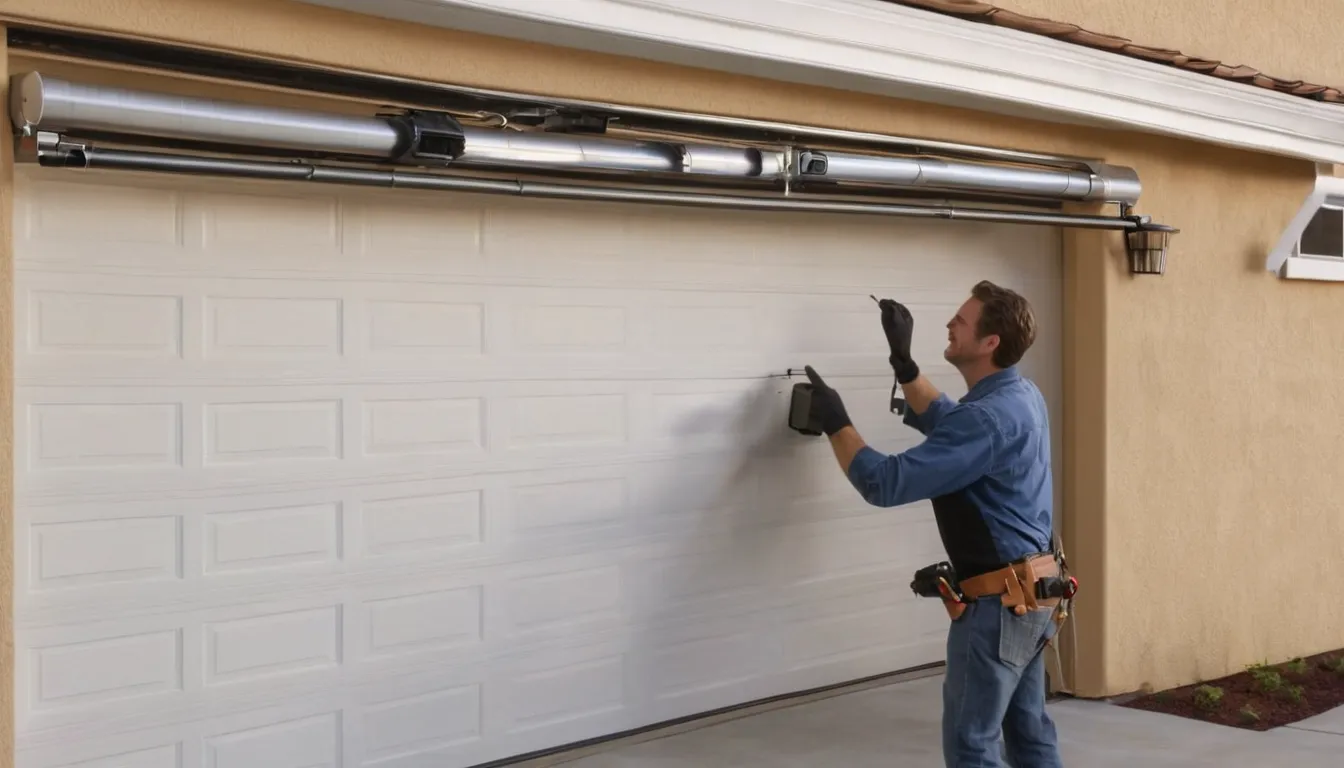
Garage Door Spring Repair for Busy North Salt Lake Households
Think of a garage door spring like the muscle in your arm. It does the heavy lifting so the door feels light. When that muscle gives out, the door suddenly feels like a slab of concrete, and the opener struggles to move it.
Degreeorigin Garage Doors is a referral service. The providers in our network do the spring work, not us. We explain what is going on in plain words, then connect you with an independent local provider. Plan around life: tell the provider when someone will be home, and ask what the visit will involve before anyone arrives. You can request an estimate with no obligation.
Broken Spring? Stop and Stay Safe
If you heard a loud bang from the garage and the door will not lift, a spring has likely let go. Stop there. Do not keep pressing the wall button.
The opener is built to guide a door, not carry its full weight. Forcing it can strip gears or bend parts. That turns a single repair into a bigger one.
- Keep kids and pets out of the garage.
- Leave the door where it is.
- Do not touch the cables or the springs.
Small Signs First
Springs rarely fail with no warning. They wear out the way a rubber band does after many stretches. The signs are quiet at first.
How to Tell if a Spring Is Broken
Look for a visible gap in the coil above the door. Notice if the door rises only a few inches, then stops. A door that hangs crooked, or feels heavy when you lift it by hand with the opener disconnected, is another clue. Cables may also look slack.
Warning Signs Before a Break
- A groan or squeal when the door moves
- A door that moves slower than it used to
- A door that drifts down when halfway open
- Rust or stretched-looking coils
Catching these early lets you pick a convenient day instead of a rushed one.
Two Spring Types, Explained in Plain Words
Torsion Springs
A torsion spring sits on a bar above the door. Picture winding a jar lid tight and holding it that way. The twist stores energy, and the spring releases it as the door moves. These are common on newer frame-built homes and tend to run smoothly.
Extension Springs
Extension springs run along the sides of the track. They work like a stretched rubber band, pulling as they shorten. They are common on older or lighter doors. A safety cable is usually threaded through them to catch pieces if one snaps.
Why You Should Not Replace Springs Yourself
A wound spring holds a lot of stored force. One slip with a wrong tool can cause a serious injury. The parts also have to match your door's weight. A spring that is too weak or too strong makes the door unbalanced.
That is why this is a job for a trained provider. Online videos make it look simple. It is not.
Plan Around Life: What a Visit Includes
Most visits follow a clear path. A provider confirms the door's weight, checks the cables, rollers and brackets, and then fits springs that match. They usually rebalance the door and test it before leaving.
Track Alignment and Other Checks
While they are there, many providers check track alignment. A bent or shifted track puts extra strain on new springs. Ask whether this check is part of the visit.
Scheduling With a Full House
Tell the provider about school runs, work hours and any days the car must get out. Many providers can fit a visit around those gaps. Call hours vary by provider, so ask when they can come.
Standard vs. High-Cycle Springs
Think of tires. Some are made for a short commute, others for long miles. Standard springs are rated for a set number of open-and-close cycles. High-cycle springs are rated for more.
If your door is the family's main entry, used many times a day, a higher cycle rating may be worth asking about. Cold snaps, dry air and strong sun at altitude can also stress metal and lubricant over time.
Questions to Ask the Provider
- Are both springs replaced at once, or just the broken one?
- What cycle rating are the new springs?
- Is the quote in writing, with parts and labor listed?
- Will you check the cables, rollers and track alignment?
- Is there a warranty on parts or labor from your company?
If the opener also seems tired, ask whether a new garage door opener is worth discussing, or whether the current one is fine.
Urgent but Not Panicked
If a car is stuck inside or the door is open to the weather, ask about emergency garage service. Availability varies by provider, so Request a callback to check who can respond quickly in your area.
What Happens After You Reach Out
Degreeorigin Garage Doors passes your details to an independent provider in the North Salt Lake area. The provider gives you a written quote and sets a time. You decide whether to go ahead.
What's Included
Spring Condition Check
The provider looks at coils, cables and brackets to see what wore out and what is still sound.
Door Weight Matching
Springs are chosen to suit your door's weight so it lifts and rests evenly.
Balance and Safety Test
After the swap, the door is tested for smooth travel and a safe stop.
Track and Hardware Review
Rollers, cables and track alignment are looked over so new springs last.
Typical Spring Repair Costs in the U.S.
Prices depend on spring type, door size and your region. These ranges are typical across the U.S. and only a guide. Always get a written quote from the provider before work begins.
| Item | Typical range | Notes |
|---|---|---|
| Single torsion spring | $150 – $350 | Often replaced as a pair |
| Pair of torsion springs | $200 – $500 | Common on heavier doors |
| Extension spring pair | $100 – $300 | Safety cables may be extra |
| High-cycle spring upgrade | $300 – $700 | Rated for more door cycles |
| Cable replacement | $100 – $250 | Often checked with springs |
| Track alignment | $100 – $300 | Depends on how bent the track is |
How It Works
Tell Us What Happened
Share what you heard or saw, such as a bang, a gap in the coil, or a stuck door.
Get Connected
Degreeorigin Garage Doors refers you to an independent provider in our network near you.
Review the Quote
The provider explains the work and gives you a written quote to look over.
Pick a Time
Choose a visit that fits your family's schedule, then the provider does the work.
Why Call Degreeorigin Garage Doors
Less Time Searching
One request reaches an independent provider, so you skip the long search.
Plain Answers
We explain the problem in simple words before you talk with a provider.
Fits Your Schedule
Share your busy hours and ask providers to plan the visit around them.
No Obligation
Request an estimate and decide later whether to book the work.
Other Services
Need garage door spring repair in North Salt Lake?
Tell us what your garage door is doing. We will point you toward an independent local provider in our network. No obligation.
No obligationGarage Door Spring Repair FAQ
How do I know if my garage door spring is broken?
Look for a gap in the coil, a door that lifts only a few inches, slack cables or a loud bang you heard earlier. If you see these signs, stop using the door.
Can I open my garage door with a broken spring?
It is not safe to try. The door is very heavy without spring help, and forcing it can hurt you or damage the opener. Leave it closed and ask a provider to look.
How long do garage door springs last?
Many standard springs last several years, depending on how often the door is used. Heavy daily use, rust and temperature swings can shorten that. High-cycle springs are rated for more openings.
Get in touch
Tell us what your garage door is doing. We will point you toward an independent local provider in our network. No obligation.
No obligation